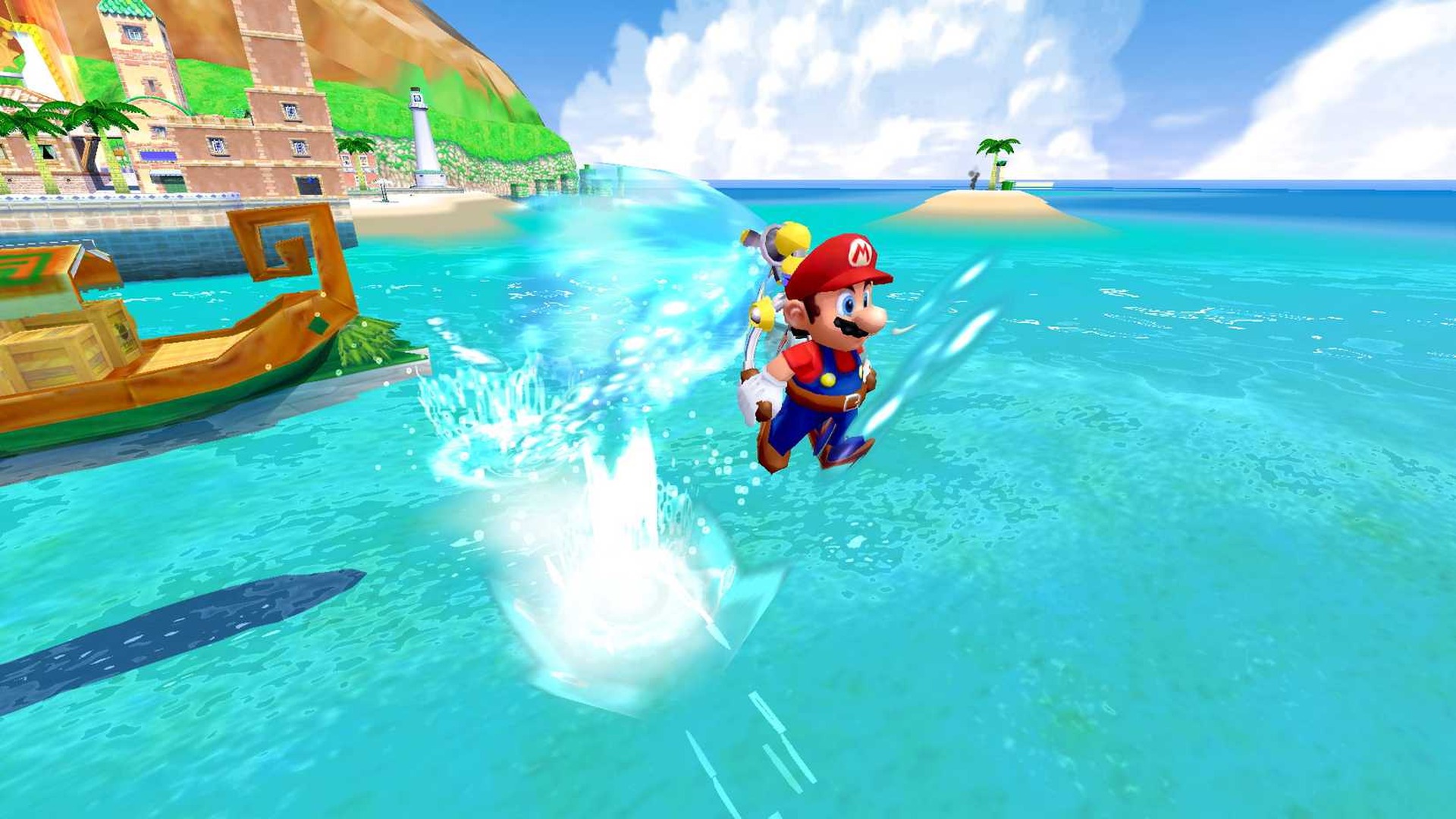
Super Mario Sunshine and The Legend of Zelda: The Wind Waker doomed the GameCube — and saved Nintendo. Nintendo’s two most defiantly strange early-2000s flagships embodied a company willing to reject both PlayStation’s market lead and its own fans’ expectations, a gamble that failed the console but helped define the creative stubbornness behind the DS and Wii.
This argument is central to a recent essay on Polygon, published as Nintendo added Super Mario Sunshine to the GameCube collection on Nintendo Classics. It offers a sharp perspective on a machine remembered less as a commercial contender than as a small purple box that kept making choices nobody else would have dared to make.
The GameCube wanted no part of the living-room future Sony had mapped out with PlayStation 2. It used tiny discs rather than standard DVDs, arrived in purple, wore a carry handle, and paired one conventional analog stick with a famously oversized green A button. Even before the games entered the conversation, Nintendo had made a console that looked less like consumer electronics than a toy chest with an attitude.
Nintendo turned its biggest icons into arguments
Nintendo had trained players to expect a major Mario statement at the launch of its previous two consoles. Instead, the GameCube opened with Luigi’s Mansion, a haunted-house adventure starring Mario’s overlooked brother; Super Monkey Ball, Sega’s brightly surreal balancing act; and Wave Race: Blue Storm, a personal-watercraft racer. Mario arrived later, and when he did, Nintendo sent him on holiday with a water cannon and a community-service sentence.
Super Mario Sunshine remains divisive because it treats a Mario platformer like a messy vacation. Mario’s FLUDD pack washes graffiti-like goo from Isle Delfino, shoots him into the air, and turns movement into a balancing act between acrobatics and resource management. As Polygon notes, the game’s bold experimentation does not always land. Still, the physical pleasure of blasting away grime with clear water gives Sunshine a tactile personality few 3D platformers have ever matched.
It was a strange choice precisely because Mario’s movement had become sacred. FLUDD does not simply expand his jump; it changes the relationship between player and character. The hover nozzle can rescue a missed landing, but it also makes the player think in bursts of water, altitude, and recovery. For some, that mechanical assistance feels like a break from Mario’s pure run-and-jump identity. For others, it is the whole point: Nintendo taking its most dependable mascot and refusing to let him stand still.
The same contrarian instinct made The Wind Waker possible. Nintendo had shown a SpaceWorld Zelda tech demo that suggested a more realistic continuation of Ocarina of Time, then unveiled a Link who looked, in Polygon’s description, like “a cartoon toddler.” Fans who expected another epic, lyrical fantasy saw cel-shaded seas and expressive animation instead.
That visual break was not a minor aesthetic adjustment. It announced that Nintendo would not let an audience’s expectations harden into a permanent rulebook. The Wind Waker’s cartoon-like style became one of the GameCube era’s most recognizable acts of visual confidence: a Zelda adventure that could be broad, playful, and emotionally direct without chasing the look people assumed a major adventure game needed.
Watch the period marketing in this official first-party Super Mario Sunshine trailer from Nintendo’s 2002 GameCube Promo DVD. It captures the sunny, slapstick pitch Nintendo made at a moment when its hardware strategy looked determined to resist the industry’s idea of seriousness.
The GameCube’s failure was built into its defiance
Polygon calls Nintendo’s early GameCube posture “commercial suicide,” and the phrase fits because the company was not merely competing with PlayStation 2; it was arguing with the direction the market had taken. Sony had made games consoles feel like essential living-room hardware. Nintendo responded with miniature optical media, no DVD playback, an unusual controller layout, and a design that made no attempt to blend into a stereo rack.
None of that makes the GameCube’s library less beloved. In a way, it explains why the machine still inspires such fierce affection. The hardware’s personality gave its games room to be idiosyncratic. Sunshine could be uneven and still feel joyous. Wind Waker could court controversy and still become a visual classic. The GameCube did not offer a polished consensus vision of where games were going; it offered Nintendo’s uncompromising answer.
That answer carried a cost. A console cannot win a mainstream hardware fight solely by being distinctive, especially when its rival has already turned into the default choice for players who want games, movies, and familiar third-party support in one box. The GameCube’s resistance to that standard made it memorable, but it did not make it the market leader.
Satoru Iwata turned the tantrum into a strategy
The more important legacy came afterward. Polygon notes that Satoru Iwata became Nintendo president not long after the GameCube’s release and channeled the company’s desire to take a different route into the Nintendo DS and Wii. By the time those systems arrived, the audience had grown ready for a real alternative to the direction set by Sony and Microsoft.
The DS and Wii were not GameCube sequels in any simple hardware sense. What they inherited was the willingness to make a clear, potentially unpopular choice: touch controls instead of another conventional handheld layout, motion control instead of treating ever-more-familiar pads as the only future. Nintendo did not abandon its weirdness after the GameCube. It learned to package weirdness around a sharper understanding of what could pull new players in.
That is why Sunshine and Wind Waker matter beyond their individual reputations. They were not just cult favorites trapped on an underperforming machine. They were proof that Nintendo still knew how to make its biggest franchises feel unstable in the best sense — open to disruption, surprise, and an occasional misfire. A safer Mario game might have pleased more people in 2002. A more expected Zelda might have avoided the initial backlash. Neither would have said as much about Nintendo’s willingness to bet against the obvious.
Sunshine’s return makes the GameCube argument feel fresh again
Nintendo Classics gives Super Mario Sunshine another chance to be judged on its own terms rather than as the Mario game that followed Super Mario 64. Its flaws remain part of the conversation, but so does its carefree energy: the holiday setting, the pressure-washer absurdity, and the feeling that Nintendo had decided a blockbuster platformer could afford to get sand in its shoes.
The GameCube era is often reduced to the story of a console that lost. That misses the more interesting part. Nintendo’s most awkward hardware generation became a creative stress test. It showed the limits of stubbornness, but it also preserved the company’s instinct to reject a market consensus when consensus starts looking like a cage.
Would you rather replay Sunshine’s unpredictable FLUDD platforming or set sail again in The Wind Waker’s boldly cartooned Hyrule? Share your pick and your GameCube memories in the comments.


![Loop Dungeon - Incremental - [IMPORTANT] Windows 11 Smart App Control Issue (Failed to load il2cpp) - Steam News](https://www.a90skid.com/wp-content/uploads/2026/10/production-post-1792559930.png)

