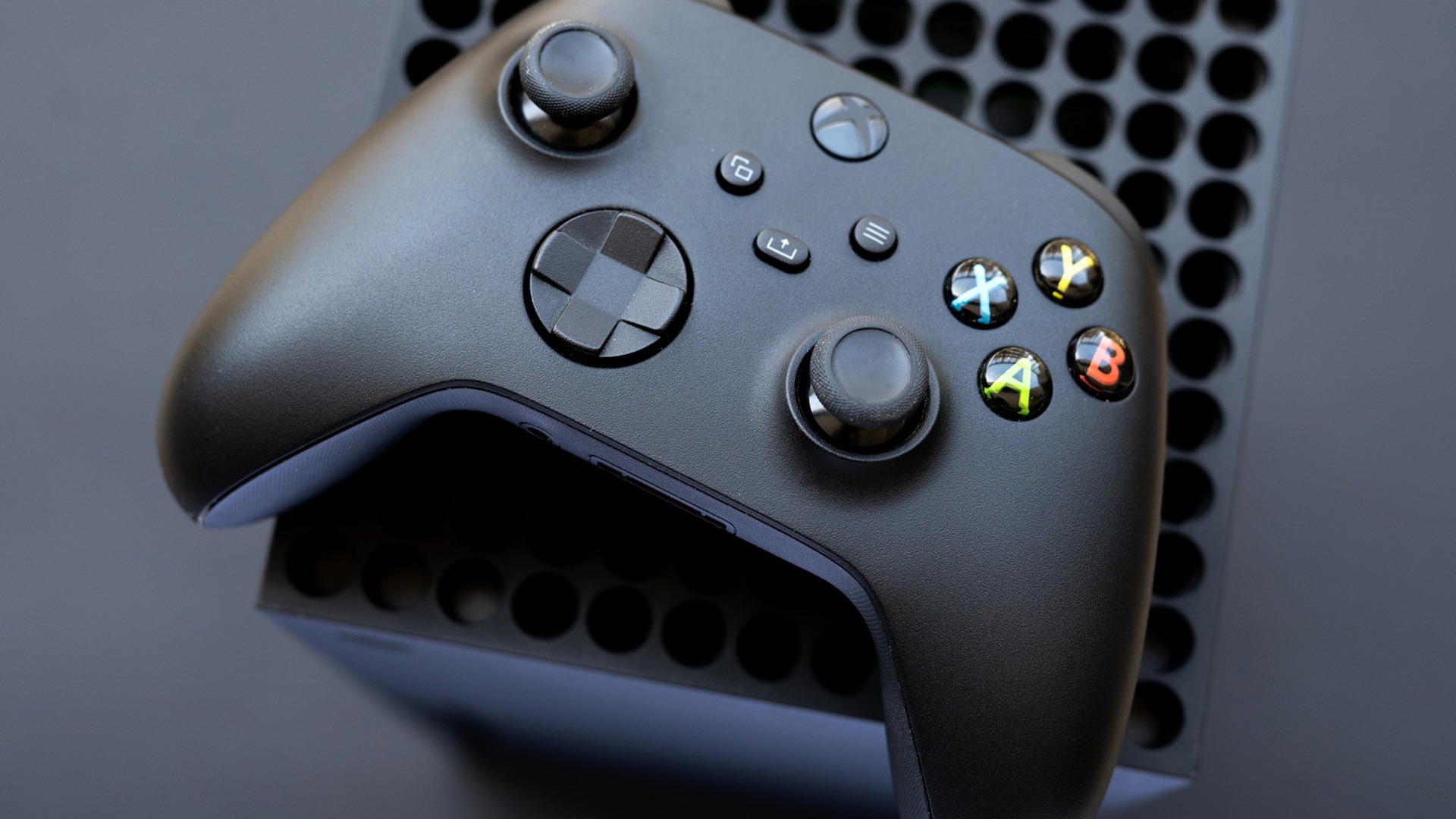
Which Nvidia GPU is equivalent to the Xbox Series X? The closest practical answer is Nvidia’s RTX 3060 Ti, with Microsoft’s AMD-powered console generally landing between the RTX 3060 and RTX 3070 in real-world play. This comparison comes from BGR’s hardware breakdown of the Series X’s graphics hardware and PC-game equivalents.
That answer needs one important clarification: the Xbox Series X is not a PC with an RTX 3060 Ti inside. Microsoft built the machine around custom AMD silicon, and developers target one fixed hardware configuration rather than the wide variety of CPUs, graphics cards, drivers, memory kits, and storage setups found on PC. Still, for anyone wondering what Nvidia-powered desktop GPU sits in the same performance range, the RTX 3060 Ti is the sensible starting point.
The RTX 3060 Ti is the Useful Nvidia Comparison
The Series X GPU uses AMD’s RDNA 2 architecture, with 52 compute units locked at 1.825 GHz. Its theoretical compute figure comes to 12.15 teraflops, while its 16GB of GDDR6 memory is shared between the graphics hardware and CPU.
Those numbers can tempt people into matching the console with a PC card by raw compute alone. However, teraflops measure a narrow kind of mathematical throughput; they do not account for architectural differences, memory arrangements, CPU behavior, software overhead, or the fact that console developers can optimize directly for a single fixed box.
At 1440p in many multiplatform games, BGR reports that the RTX 3060 Ti performs similarly to the Series X. It is not a perfect one-for-one translation, but it is a more helpful buying reference than treating the console’s teraflop number as a universal score.
The practical PC shorthand is simple: Xbox Series X-class graphics performance starts around the RTX 3060 Ti, not at the top end of Nvidia’s product stack.
Why the RX 6800 Comparison Tells Only Half the Story
The Series X’s custom GPU is based on AMD’s Radeon RX 6800 family, which explains why that card often appears in discussions of the console’s internals. But “based on” does not mean “performs exactly like.” The console uses a custom implementation, and its shared memory pool differs from the discrete graphics-card setup in a desktop PC.
That is why the RX 6800 is best treated as a family resemblance rather than a shopping recommendation. If you are building a PC specifically to approximate the Series X’s graphics tier, an RX 6800 may oversimplify the situation. The RTX 3060 Ti gives the clearer Nvidia-side performance reference, while AMD’s RX 6700 XT is another close match cited in the comparison.
There is a useful lesson here for spec-watchers: console hardware often looks unusual when dropped into a desktop comparison. It combines fixed clocks, customized silicon, shared system resources, and a platform developers understand down to the smallest constraint. A PC needs more headroom because it must cope with much less predictable conditions.
Forza Horizon 6 Offers a Practical Reality Check
Microsoft’s recommended Steam specifications for its own Forza Horizon 6 point to the RTX 3060 Ti, AMD RX 6700 XT, or Intel Arc A580 as comparable graphics options. That is more useful than an abstract silicon argument because it connects the Series X discussion to a game Microsoft built for the platform.
Recommended PC specifications are not a secret decoder ring for console performance, and they do not promise identical settings or image quality. They do, however, show where developers expect a PC’s graphics capability to sit for a game with Series X roots. On Nvidia’s side, that marker again lands on the RTX 3060 Ti.
Intel’s Arc A580 appearing in the same recommendation also underlines how much more complicated the PC market has become since the Series X arrived. PC players do not need to chase one exact card to reach console-like results; they need to look at the actual game requirements, their target resolution, and whether they value higher settings, faster frame rates, or a lower upgrade cost.
Console Optimization is Still the Series X Advantage
The Series X does not beat every RTX 3060 Ti-equipped PC by default, nor does an RTX 3060 Ti automatically guarantee a better experience than the console. The two platforms solve the same problem differently. Xbox developers know the exact GPU, CPU, memory pool, and storage behavior they are targeting, while PC developers must scale games across a vast field of hardware combinations.
That standardization matters when a game leans heavily on asset streaming, complex scenes, or demanding effects. On console, a developer can make tightly targeted choices. On PC, the same developer has to account for different processors, driver versions, available memory, and background software before a single frame reaches the display.
For a value-conscious builder, the takeaway is straightforward: do not overspend on the assumption that matching the Series X demands an elite Nvidia card. The RTX 3060 Ti class is the relevant baseline. For the enthusiast who wants to push beyond console-style settings or pursue higher resolutions and frame rates, the Series X comparison should be the floor of the conversation—not the finish line.
Microsoft also built the Series X around more than its graphics component, including features like Quick Resume and home-screen customization, but the GPU question remains the one that cuts through the marketing. Its AMD RDNA 2 hardware is solid for a fixed console design; in Nvidia PC terms, it belongs squarely in the RTX 3060 Ti range.
Would you rather match the Xbox Series X with an RTX 3060 Ti-class PC, or spend extra for the higher settings and frame rates a stronger GPU can deliver?